Misson Statement

Mission Statement
Earth Servant is an offering of information for the public. The goal is empowerment. Through recipes, curriculum, homesteading basics, earth-care know how, peasantry life and food sovereignty, may this information help in some way.
Showing posts with label Goats. Show all posts

Thursday, April 26, 2012

New Goat Times - Goat Midwifery!

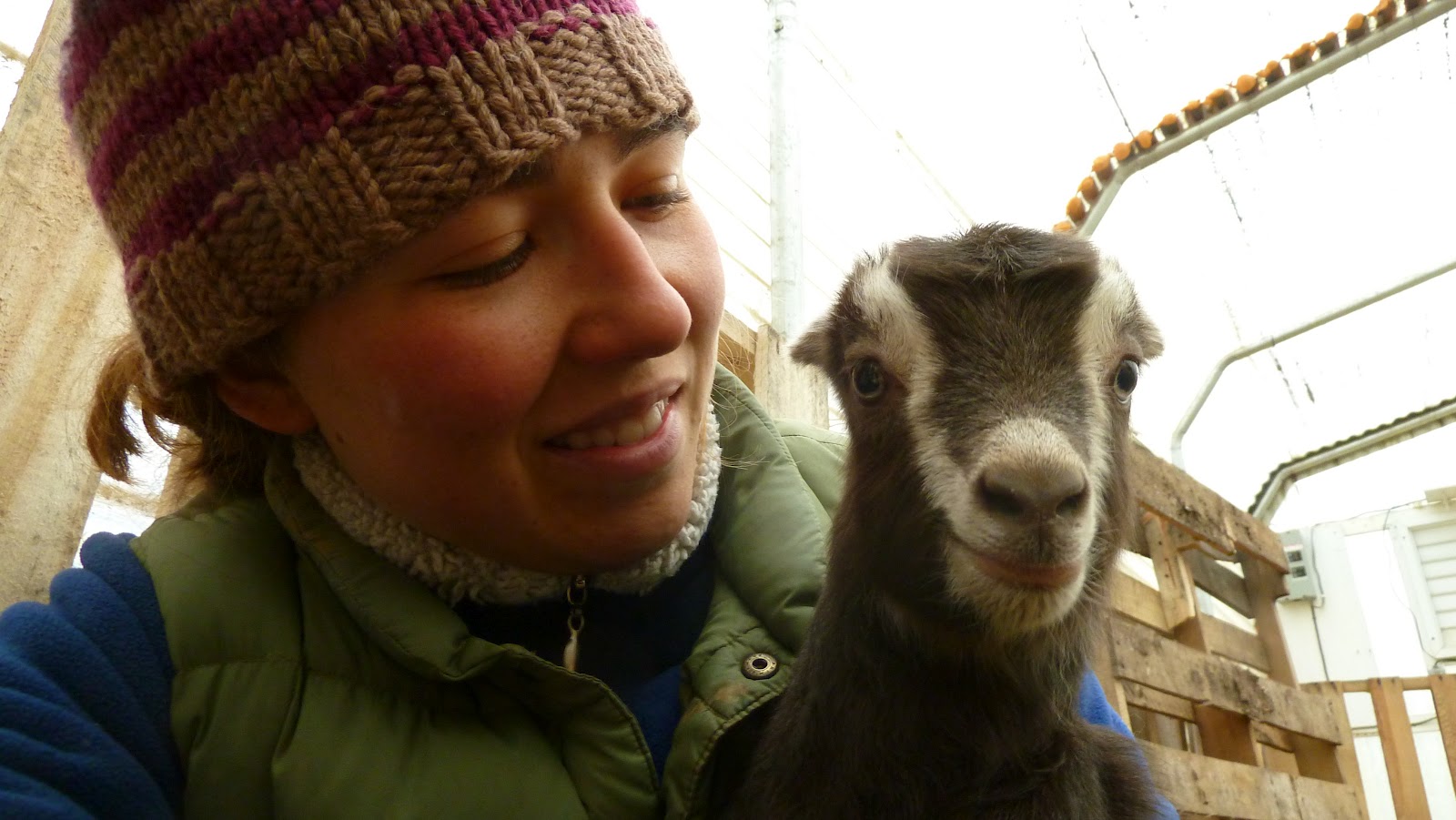
As the rain falls so do little goat kids from the uterus. This spring has been a whirlwind of activity for Nick and me - trying to find a new place to live, then moving all the animals and our belongings, scrambling against weather and time to establish growing beds, setting up a make-shift living area for our goats to have babies, and then having A LOT of kids born in a not-so-ideal space. Stress levels were high - but out of chaos came joy, and now we have lots of kids to lift the spirits and welcome in spring. We were also lucky in the fact that all the births went  smoothly with little complication.
The birthing process for a goat is a very individual experience. No goat is going to do it the same as another. The best birthing story from this spring is from Pearl - our little pure bred Nigerian Dwarf. She showed me signs of pre-labor, including braxton hicks contractions and extreme fussiness a full two days before she decided to give birth at 3am after the second day! Epic. But she birthed two very cute little kids. Pictured below!

Although we had no serious problems during birthing this spring, we did have two yearling does with delivering single kids - which tend to be larger. That makes it quite the stretch for a first timer! Something to keep in mind when dealing with first timers is to have olive oil on hand, so that you can add some extra lube and aid in stretching. If you feel like you need to help pull out a goat kid there are some VERY important things to remember.
  • If the babies are positioned normal everything should go fine.  Only help her if you feel like the kid has been in the birthing canal too long. What helps is to have a time keeping implement on hand. It is funny how time gets all fuzzy when you're watching a goat give birth. You think it has been hours and it has been 5 minuets.
  • Start timing how long they are in the birth canal after the water breaks and she begins to actively push. In general, 30 mins is the maximum amount of time they should be in the birth canal. In a normal "diving position" kid you can see the front hooves and nose. In this situation you can use the "rule of tongue" - If the tongue is blue - most likely it is time to help a little. But this is not a cut and dry issue - use your instincts and seek help if your nervous!
  • In the situation where you are going to be pulling on a kid take a firm hold of ONE hoof and gently but firmly slide it out until it is completely extended. This will help create a more arrow dynamic shape for the mom to push out. If she is still having trouble, you can do the same thing to the other leg.
  • Work with the mother's contractions. Do not be pulling on a baby when the mother is resting between contractions. This doesn't help the situation at all, only stresses the mother out even more. 
  • When you do help her, pull down - toward her haunches. Do NOT pull out away from her body. Pulling down works with the natural shape of her pelvis. If you pull out you increase her pain and probability of tearing.

 The best thing to remember is that a healthy well cared for goat is going to be set up very well to have an easy hands free kidding. They are really good at having babies, and tend to be excellent mothers. Here are some good things to have on hand waiting for your kids to arrive...
  • Olive Oil
  • Watch or Cell phone to keep time
  • Emergency contact numbers - breeders, vets, savvy neighbors etc.
  • Everclear or Vodka to sterilize implements if you need to enter the does vagina or uterus.
  • Cayenne - this can be used to stimulate weak kids (rub a VERY tiny amount onto their gums) as well as given to a doe after a difficult birth along with blackstrap molasses dissolved in warm water.
  • Clean towels - if you want to help the doe dry off her babies 
  • Heat lamp (chicken brooding lamps work great), if it is very cold - kids sometimes need extra warmth.
  • And a camera! of course.  
This is really preliminary information and I recommend watching some you tube videos of goat births or better yet finding a breeder in your area who would let you come watch first hand.
     

Saturday, December 17, 2011

The New Goat Times - Bucks

When fall comes on down the road, and you got some randy does on your hands, there is only one cure for the 'buck fever'. A stinky, horny, nasty ol' Buck-a-roo. 
Breeding season is a fun time on the farm. It means the coming of little lovely goat babes, it means the entertaining display of goat courtship, it means getting dry humped while trying to change the water bucket of a reeking doe-crazed man-goat.

Here are some things to be considering when thinking about the different ways to get your does impregnated!

Plan ahead when breeding your does
  • If you are planning on selling the spring kids consider these different options. 
    • Pure-bred and papered - This is an huge advantage when selling kids in the spring, people trust papered goats more than non, and will pay a lot more for them. That is definitely merited, but the best thing someone can do to insure they are getting a quality animal is visit the breeder and ask the right questions. 
    • Pure-bred and not papered -  These animals are sold at a much lower price, and tend to be kids that don't meet breed standards or are from a breeder who does not take part in the American Dairy Goat Association. They are sold at a moderate price and tend to be just as easy to sell as papered.
    • Mutt - This kind of kid is going to be the hardest to sell to a good home and will have to be sold at a discounted price. Cross breeding genetics can be a great way to diversify your gene pool, but you have to understand that along with incorporating good traits, you can create bad ones as well. You should be prepared to have all kinds of results.
Choosing a buck is very important - Own your own or get a loan?


There is an old goat husbandry saying that goes "The buck is half your herd" - which is so very true, not only in terms of genetics, but also in regard to responsibility. Bucks require an entirely different management, so to some it is not worth the infrastructural costs and smells to own your own. Yet, owning your own offers many advantages and security in breeding success.
Zeus is our La Mancha buck
  • Owning your own buck
    • Investing in a quality animal is essential, and a healthy pure-bred buck can cost anywhere from 300$ and up. Pure breeds are not a must, but more reliably healthy. If you choose to go with non-pure bred animal make sure you know and trust the breeder. Before you purchase an animal go to the farm and meet with the breeder and the buck you wish to buy. When you meet the buck look for these qualities.
      • Sturdy legs and walk, no limping, no swelling in the knees or ankles
      • Friendly temperament, no aggressive reactions to your presence  
      • Healthy coat with no lice or mites
      • Run your hands over his body and make sure he has no lumps on his neck, around his head, or under body
      • Clear eyes with no discharge
    • Penning up a buck can be tricky, especially when he goes into what we call 'rut'. Or in other words 'horny goat mode'. The fence should be able to hold up to lots of standing on and be at least 4 ft tall. However, our little Nigerian buck that comes up to my knee is able to easily clear a 4ft fence when he has the urge to find the ladies. SO, some fellas need a 5-6 ft. fence! 
    • When a buck is in rut they get very very stinky from peeing on their face and legs constantly. Housing them away from your home is a good idea. Just keep in mind that the stinkier the buck the more the ladies love them.
    • Feeding a buck is much easier than feeding a doe and they can be very useful for clearing brush and dreaded poison oak. You do not need to feed your bucks grain, they don't need it and too much in some cases can be fatal. A quality mold free grass hay and forage will suffice. Feeding them a ration of alfalfa can boost their testosterone as well, which is useful during breeding season. 
  • Loaning/renting a buck 
    • This is a great option - however - it is very hard to find quality bucks on loan, there are all kinds of diseases that goats pass on to each other, and a lot of quality breeders do not want to risk infecting one of their animals and bringing it back to their herd after the loan is over.
    • If you find a buck to loan or rent you usually pay for a month or two of time to have the bucks live at your farm. This is useful for spurring the does into their heat cycles as well as being able to easily detect when they are ready for breeding. You also then don't have to house and feed the buck for the other 10 months of the year when they aren't "needed".
    • Then once the signs of heat are obvious, you can just put them in a pen together and watch the magic happen. 
    • Some choose to house the buck with the females, not separately. there are many disadvantages to this in opposed to the convenient benefits.
      • The bucks can be relatively aggressive and some people believe they can cause aborted pregnancies with their constant butting. 
      • If you're still milking your does, the odor of a buck in rut can taint the taste of the milk and make it very "goaty".
      • You cannot tell when exactly they breed, thus planning for kidding in the spring tends to be a surprise, in stead of an expectation. 
      • If you have more than one buck, you cannot selectively breed them with the does you wish to see them with.
    • Find a breeder in your area that you have visited and trust. Inquire with them if they rent bucks - if they do not - sometimes they allow on-site breeding.
      • On-site breeding is another option that people without a buck on their farm choose. If you only have a few does this can be the best option. But, you end up with the least likely possibility that they will get pregnant. 
Thor the Nigerian Dwarf buck contemplating jumping the fence.
That is a preliminary run-down of some things to consider when it comes to owning and utilizing bucks for breeding your milk goats. There is much more information available out it the internet ethos, so don't stop here and any questions or comments are welcome! 


    Saturday, December 10, 2011

    New Goat Times

    Hello out there in the world. I am going to make it a point to do some blog entries about my experience taking care of our milk goats and some of my struggles and solutions that I have encountered along the hilarious path!
    For starters I would like to profess my goals in goat husbandry. I am beginning a long journey towards the creation of the perfect homesteading goat. This is going to involve selective cross breeding for traits such as...
    • Hardiness to weather and disease
    • Ideal teat shape for hand milking
    • Strong foraging instincts
    • Milk quality (taste and butterfat)
    • Milk quantity 
    • Friendly and easy to handle 
    • Medium size
    • And packed with personality!! 
    This is going to involve incorporating three main breeds in my program.
    • Toggenburg - This old and wise breed of goat hails from the valleys of Switzerland and is considered one of the oldest and purest breed of European milk goats. They are extremely hardy and have very good milk production. They have a calm demeanor.
    • La Mancha - This exotic breed is from Spain but was developed for the most part in the United States in the early 1900's. It is noted for its lack of ears, dubbed 'gopher ears'. They have extremely high milk production and very high butterfat. They also have a bubbly goofy personality.
    • Nigerian Dwarf - This small spunky breed came to the united states from Africa initially being bred as Lion food! However, they are much more valued as milk goats due to their convenient size, intelligence, plucky attitude and extremely high butterfat.
     Stay tuned for updates on the ladies and our journey towards milk goat excellence!